
Retinal for Skin: 11 Life Changing Things Beginners Should Know
Retinal for skin is becoming popular because it offers many of the benefits people want from vitamin A skincare, but it can feel confusing if you are new to retinoids. You may have heard of retinol before, but retinal is slightly different.
Retinal, also called retinaldehyde, belongs to the retinoid family. Retinoids are vitamin A derivatives used in skincare for concerns like acne, texture, fine lines, uneven tone, and signs of sun damage. DermNet lists retinaldehyde as one of the topical retinoids commonly used in cosmetic skincare.

1. Retinal Is Stronger Than Retinol
Retinal and retinol are often confused, but they are not exactly the same.
Both are vitamin A ingredients, but retinal is closer to the active form your skin uses. This means retinal can feel more effective than retinol for some people, but it may also be more irritating if introduced too quickly.
If you are completely new to skincare, retinal might not be the first ingredient to start with. It is better to build a simple routine first, then add retinal once your skin is calm and consistent. Start with our basic skincare routine for beginners if you do not already have the basics in place.
2. Retinal Can Help Improve Skin Texture
One reason people use retinal is to help skin look smoother over time.
Retinoids work by affecting how skin cells behave. Cleveland Clinic explains that retinol can increase skin cell production, help unclog pores, exfoliate the skin, and support collagen production, which is why vitamin A ingredients are often used for texture and signs of ageing.
This does not mean your skin will look perfect overnight. Retinal needs consistency. You may notice smoother-looking skin gradually, especially if your routine also includes moisturiser and SPF.
3. Retinal May Help With Breakouts
Retinal can also be useful if your skin is prone to clogged pores or breakouts.
Retinoids are commonly used in acne care because they help prevent pores from becoming blocked. Cleveland Clinic notes that retinol works for acne by helping prevent clogged pores, though it can take time and skin may look worse at first as it adjusts.
If you have acne-prone skin, start slowly. Using retinal too often too soon can cause dryness, peeling, or irritation, which may make your skin feel worse before it improves.
4. It Can Help With Uneven Tone
Retinal may also help skin look more even over time.
DermNet explains that topical retinoids can be useful for post-inflammatory hyperpigmentation because they help with melanin dispersal and are often used for acne-related pigmentation, especially in skin of colour.
However, retinal only makes sense if you are also using SPF. Without daily sun protection, uneven tone and dark spots can become harder to improve. If you are unsure which sunscreen suits your skin, read our guide on how to choose sunscreen for your skin type.
5. Retinal Can Irritate Your Skin
Retinal can be effective, but it is not something to rush.
Common retinoid side effects include dryness, peeling, irritation, and increased sun sensitivity. DermNet also notes that topical retinoids can cause retinoid dermatitis, irritant contact dermatitis, and sun sensitivity.
If your skin burns, stings, or becomes very red after applying skincare, your barrier may already be stressed. In that case, do not force retinal into your routine. Read our guide on why your skin burns when you apply skincare first.
6. You Should Start Slowly
The best way to use retinal is to introduce it gradually.
Start with a low-strength retinal product once or twice a week at night. Apply it after cleansing, then follow with moisturiser. If your skin tolerates it well, you can slowly increase usage over time.
You only need a small amount. More product does not mean faster results — it usually means more irritation. If your skin feels dry or tight, reduce how often you use retinal and focus on moisturising.
DermNet notes that retinoid irritation can be minimised by using a minimal amount on alternate nights at first and applying a light moisturiser if needed.
7. How to Layer Retinal in Your Routine
Retinal should be used at night, not in the morning. Start with clean, dry skin, because applying retinal to damp skin can make it absorb faster and increase irritation.
A simple retinal night routine looks like this:
Cleanser → moisturiser → retinal → moisturiser
This is called the “sandwich method,” and it is helpful for beginners because the first layer of moisturiser buffers the retinal and makes it less irritating.
If your skin is already used to retinal, you can apply it like this instead:
Cleanser → retinal → moisturiser
Use a pea-sized amount for your whole face, avoiding the eye area, corners of the nose, and corners of the mouth. These areas are more likely to become dry or irritated.
8. Products You Can Use With Retinal
Retinal works best with gentle, barrier-supporting products.
You can use retinal with:
Hyaluronic acid because it helps add hydration and can make your skin feel less dry.
Niacinamide because it supports the skin barrier and may help reduce irritation. If you want a gentle supporting ingredient, read our guide on <a href=”/niacinamide-for-skin” rel=”noopener noreferrer”>niacinamide for skin</a>.
Ceramides because they help support the skin barrier and reduce dryness.
Glycerin because it helps attract water into the skin.
Gentle moisturiser because retinal can cause dryness, peeling, and irritation, especially when you first start using it.
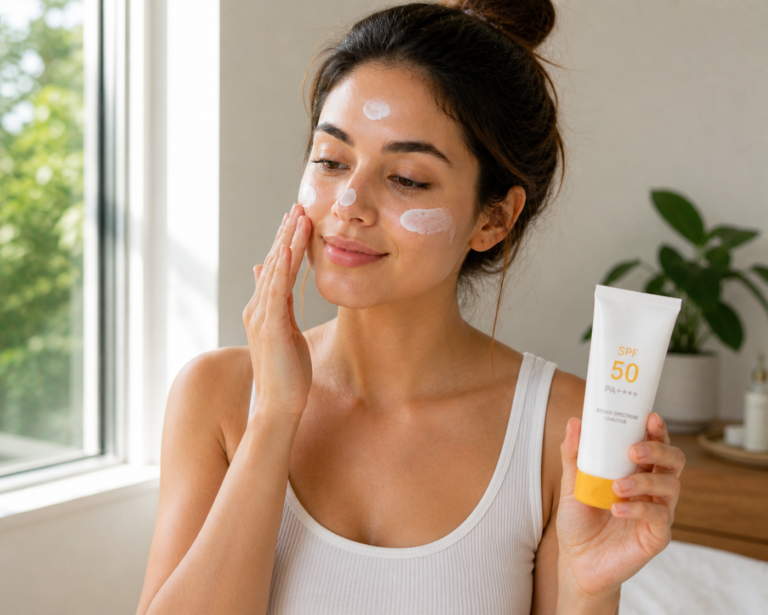
SPF in the morning because retinoids can increase sun sensitivity, so sunscreen is essential during the day. DermNet lists sun sensitivity as a possible side effect of topical retinoids.
9. Products You Should Avoid Using With Retinal
Some products are a complete no, especially for beginners, because they can make irritation much worse.
Avoid using retinal in the same routine as:
Exfoliating acids such as AHA, BHA, glycolic acid, lactic acid, and salicylic acid. These can increase dryness, peeling, and irritation when layered with retinal. Cleveland Clinic suggests alternating salicylic acid and retinol rather than using them together in the same routine.
Benzoyl peroxide. This can be very drying and irritating when combined with retinoids, so it is better to use it separately unless a dermatologist has told you otherwise.
Strong vitamin C formulas. Vitamin C can be useful in skincare, but using it in the same routine as retinal may be too irritating for beginners. Use vitamin C in the morning and retinal at night if your skin tolerates both.
Physical scrubs. Scrubbing the skin while using retinal can damage your barrier and make redness, stinging, and peeling worse.
Other retinoids. Do not use retinal with retinol, tretinoin, adapalene, or other vitamin A products in the same routine. Choose one retinoid only.
10. Who Should Avoid Retinal?
Retinal is not suitable for everyone.
If you are pregnant, trying to become pregnant, or breastfeeding, it is best to avoid retinoids unless your doctor says otherwise. DermNet notes that some topical retinoids are contraindicated in pregnancy and that women of childbearing age need effective contraception because of the teratogenic effects of retinoids.
If you have eczema, rosacea, very sensitive skin, or a damaged skin barrier, retinal may also be too irritating at first. Focus on calming and repairing your skin before adding stronger actives.
11. How Long Does Retinal Take to Work?
Retinal takes time.
You may notice small changes in texture or brightness within a few weeks, but bigger changes usually take longer. Cleveland Clinic explains that retinol starts working in skin cells right away, but visible improvement can take several weeks.
The key is consistency. Use retinal slowly, protect your skin with SPF, and avoid switching products too often.
The Bottom Line with Retinal for Skin
Retinal for skin can be a powerful ingredient for texture, uneven tone, fine lines, and breakouts, but it needs to be used carefully. It is stronger than retinol for many people, which means it can also be more irritating if you rush it.
Start slowly, use it at night, moisturise well, and wear SPF every morning. If your skin is already dry, burning, or irritated, repair your barrier first before adding retinal.
Retinal can be a great next step once your routine is stable — but like most skincare ingredients, it works best when used patiently and consistently.




One Comment