Do You Really Need SPF Every Day? Here’s the Truth
SPF is one of the most important steps in any skincare routine, but it’s also one of the easiest to ignore. A lot of beginners focus on cleansers, moisturisers, and serums first, but daily sunscreen is what helps protect your skin long-term.
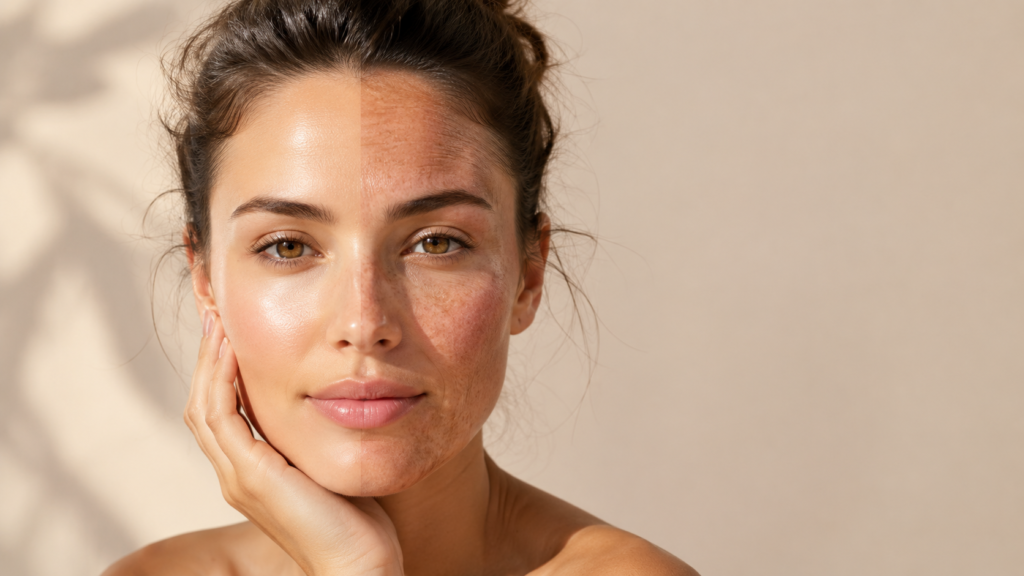
If you’re building a basic skincare routine for beginners, SPF should be the final step of your morning routine. Cleanse, moisturise, then protect — that’s the simple structure. In this article you will learn why you need SPF every day.
What Does SPF Mean?
SPF stands for Sun Protection Factor. It tells you how well a sunscreen protects your skin from UVB rays, which are the rays mainly responsible for sunburn.
But SPF is only one part of sunscreen. You also want to look for “broad-spectrum” on the label, because that means the sunscreen helps protect against both UVA and UVB rays. UVA rays are linked to visible ageing, while UVB rays are more closely linked to burning.
The American Academy of Dermatology recommends choosing a broad-spectrum sunscreen with SPF 30 or higher.
Why do you need SPF Every Day
SPF is not just for beach days or hot weather.
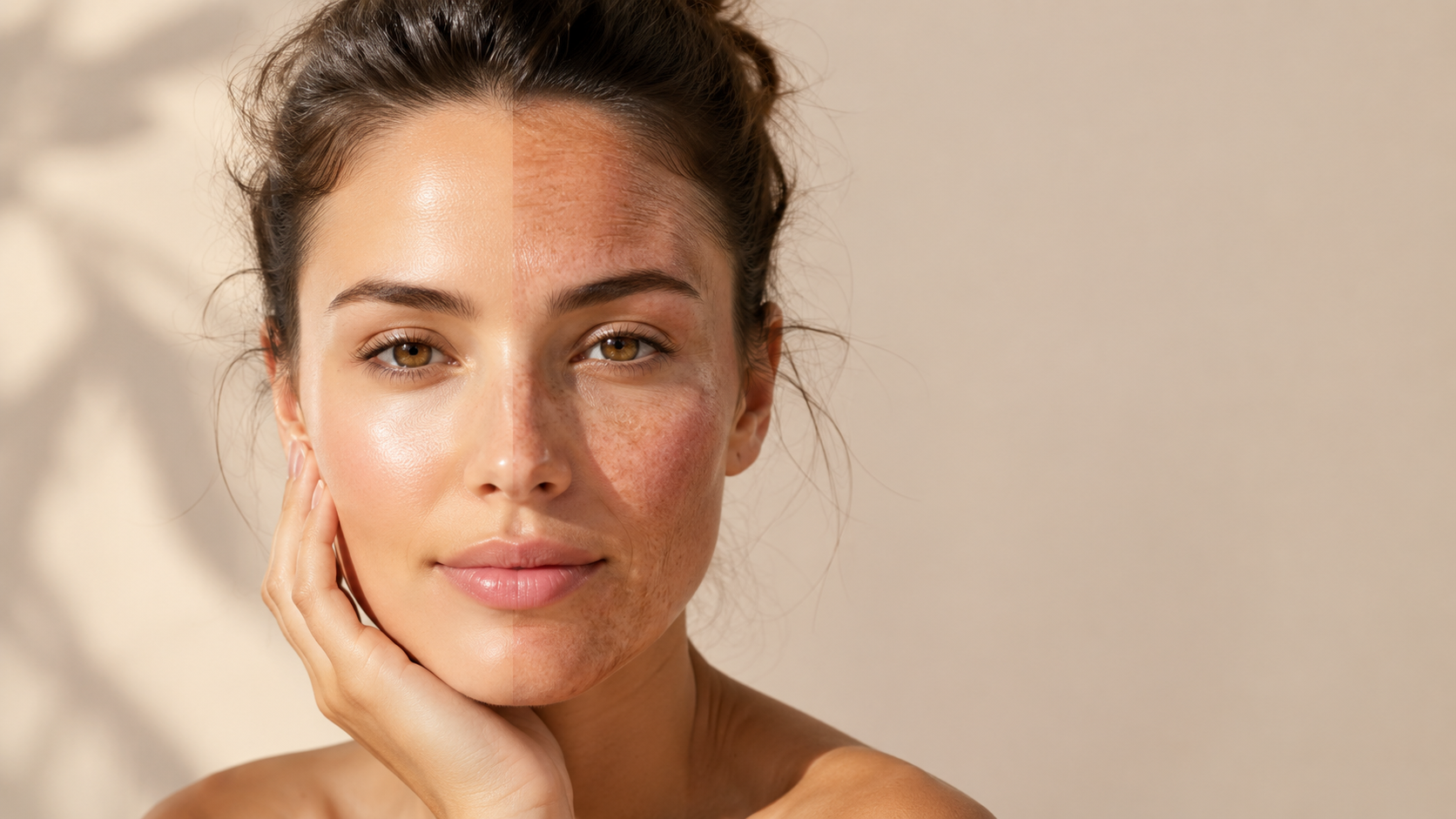
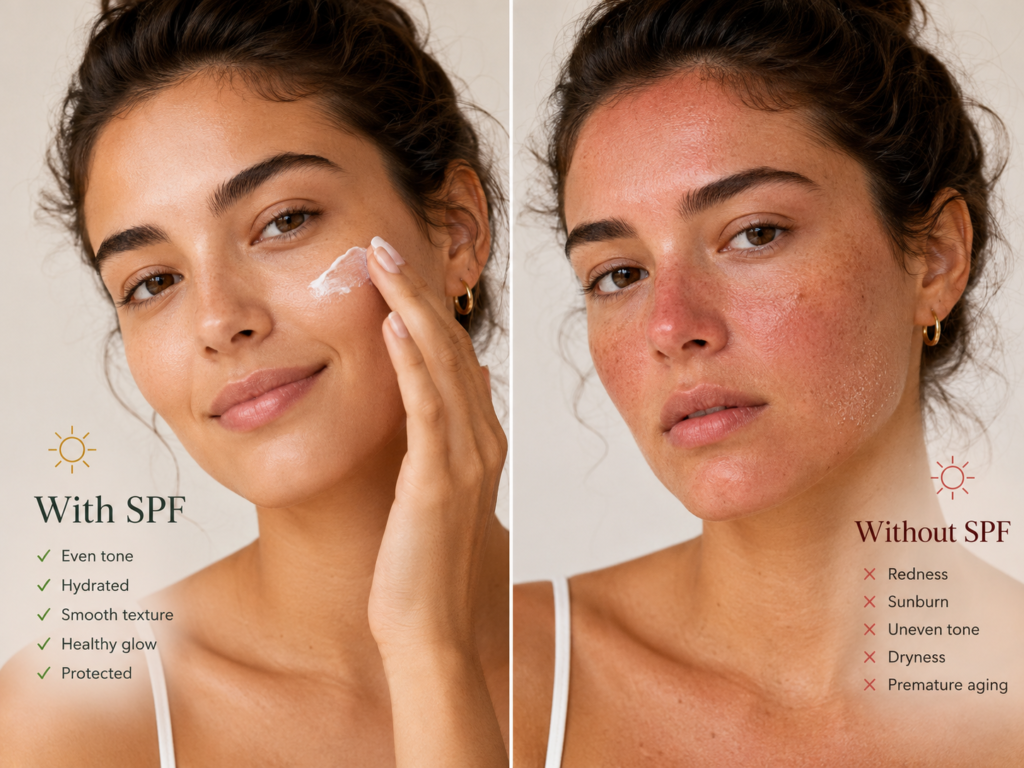
UV rays can still affect your skin when it’s cloudy, cold, or when you’re indoors near windows. Over time, daily sun exposure can contribute to dark spots, uneven skin tone, premature ageing, and skin damage.
This is why sunscreen is more of a daily habit than an occasional product. You don’t need to overthink it — you just need to apply it consistently every morning.
When Should You Apply SPF?
SPF should be the last step of your morning skincare routine.
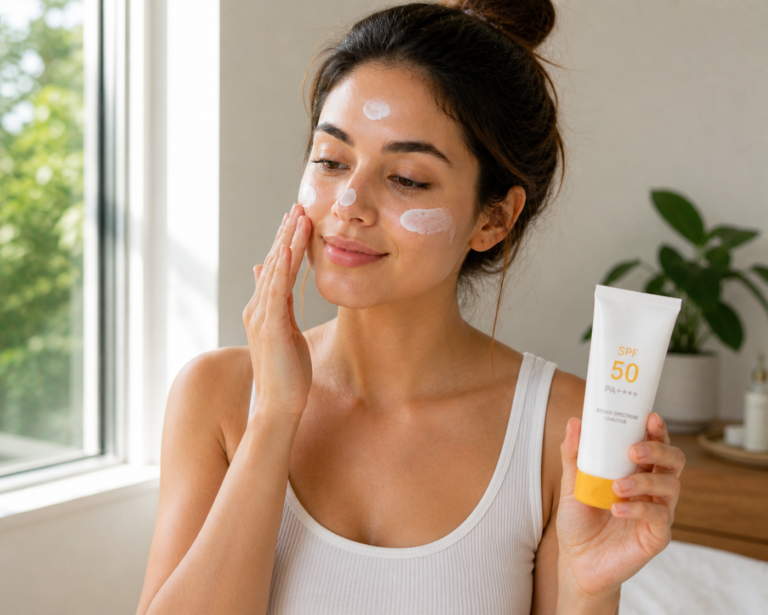
Apply your cleanser first, then moisturiser, then sunscreen. If you wear makeup, sunscreen goes underneath your makeup, not on top of it. Give it a few minutes to settle before applying foundation or concealer.
If your makeup often separates or looks patchy, your skin prep might also be part of the issue. Our guide on how to apply foundation for beginners explains how to layer your base more smoothly.
How Much Sunscreen Should You Use?
Most people don’t use enough sunscreen, which means they may not get the full protection shown on the label.
As a simple rule, use enough to cover your face, ears, and neck evenly. Don’t forget areas like your hairline, around the nose, the tops of your ears, and the back of your neck if exposed.
You should reapply sunscreen about every two hours when you’re outdoors, sweating, or spending time in strong sunlight. Water-resistant sunscreens are tested to last either 40 or 80 minutes on wet skin before reapplication is needed.
What Type of SPF Should Beginners Choose?
The best sunscreen is the one you’ll actually wear every day.
If your skin is oily, look for lightweight, oil-free, or gel formulas. If your skin is dry, a hydrating sunscreen may feel more comfortable. If your skin is sensitive, fragrance-free formulas are usually a safer place to start.
For deeper skin tones, look for sunscreens that say “no white cast” or try newer lightweight formulas that blend more easily.
If your skin barrier is already irritated, keep your routine simple and avoid testing too many new products at once. You can read our guide on how to fix your skin barrier before adding stronger skincare products.
Types of Sunscreen
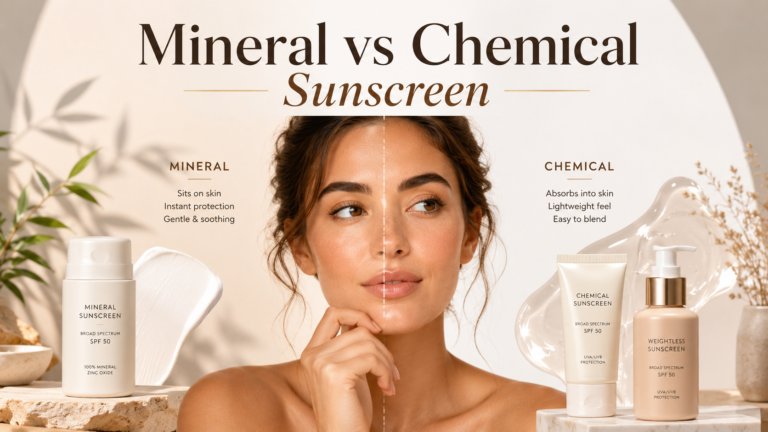
There are two main types of sunscreen: chemical sunscreen and mineral sunscreen. Both can protect your skin, but they work slightly differently and feel different on the skin.
Chemical Sunscreen
Chemical sunscreens use ingredients that absorb UV rays and convert them into heat, which is then released from the skin. These formulas usually feel lightweight and blend easily, which makes them popular for everyday use and under makeup.
They are often a good option if you want something invisible, comfortable, and less likely to leave a white cast. However, some people with sensitive skin may find certain chemical filters irritating.
Mineral Sunscreen
Mineral sunscreens use ingredients like zinc oxide or titanium dioxide. Instead of absorbing UV rays in the same way, they sit on top of the skin and help reflect and scatter UV light.
These are often better for sensitive or easily irritated skin because the ingredients are generally gentler. The downside is that some mineral sunscreens can feel thicker or leave a white cast, especially on deeper skin tones.
Tinted Sunscreen
Tinted sunscreen contains pigment, which helps reduce white cast and can make the skin look more even. It is especially useful if you want light coverage without wearing foundation.
Tinted formulas can also be helpful for people dealing with uneven skin tone or dark spots, because they give both sun protection and a subtle skin-evening effect.
Gel or Lightweight Sunscreen
Gel sunscreens are usually best for oily or acne-prone skin. They feel lighter, absorb quickly, and are less likely to feel greasy throughout the day.
If regular sunscreen feels too heavy or shiny on your skin, a gel or oil-free formula may be easier to wear daily.
Cream Sunscreen
Cream sunscreens are usually better for dry or normal skin. They feel more moisturising and can help prevent your skin from feeling tight during the day.
If your skin barrier is dry or sensitive, a cream SPF may feel more comfortable than a very matte or drying formula.
The Bottom Line
SPF is not optional if you want a skincare routine that actually protects your skin. Cleanser and moisturiser help keep your skin clean and hydrated, but sunscreen helps protect it from daily UV damage.
Start with a broad-spectrum SPF 30 or higher, apply it every morning, and make it part of your routine before worrying about extra serums or treatments. Once SPF becomes a habit, your skincare routine becomes much stronger.