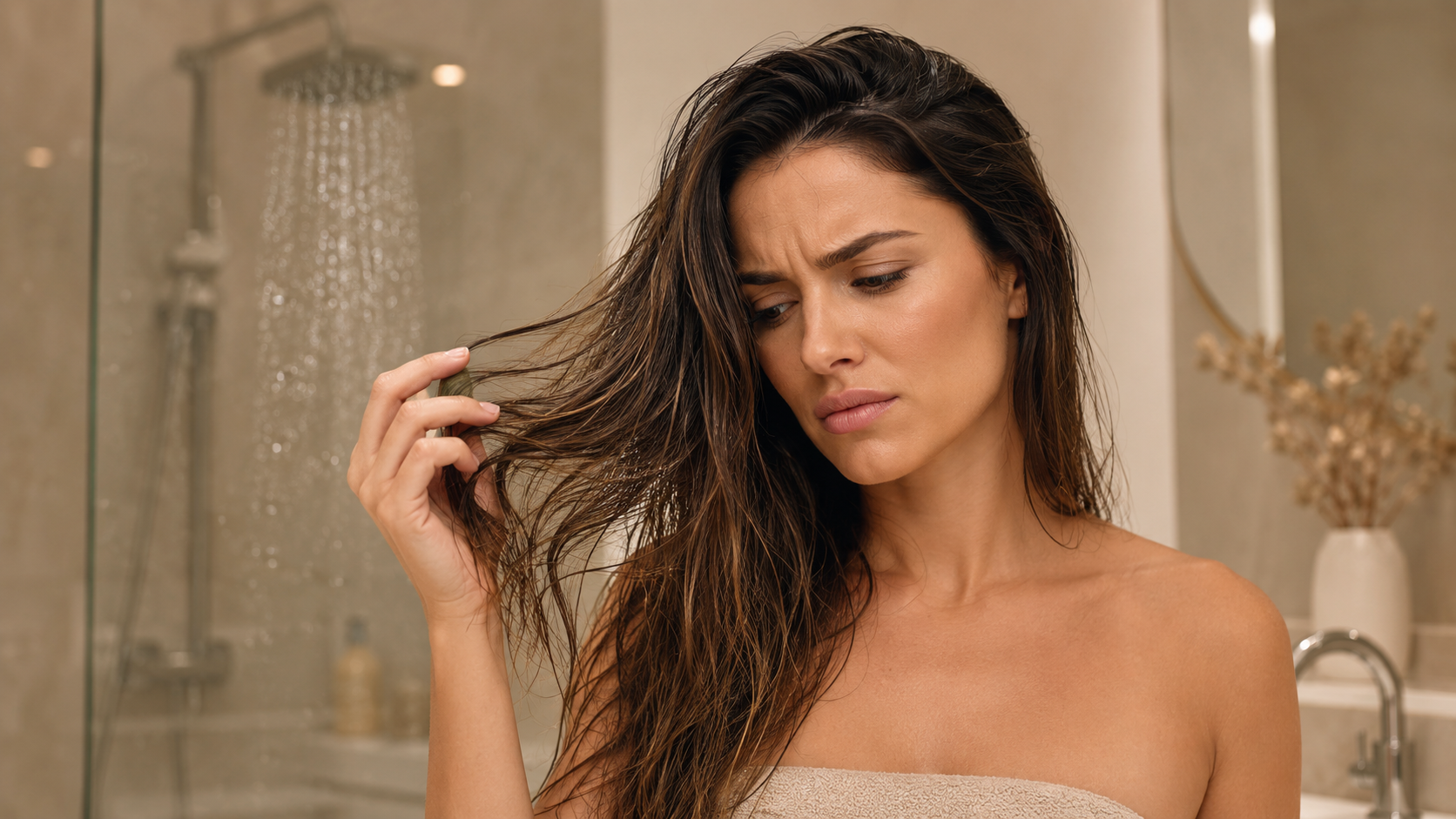
Hard Water Hair: How to Fix Waxy Hair After Washing
Hard water hair is one of those problems you usually blame on everything else first. You switch shampoos. You use less conditioner. You rinse for longer. You wonder if your hair is suddenly greasy, damaged, or just impossible to manage.
But sometimes the problem is not your hair at all. Sometimes it is your water.
If your hair feels waxy, coated, dry, dull, heavy, or tangled after washing, hard water could be leaving mineral residue behind. That residue can make your hair feel like it never gets properly clean, even when you have shampooed carefully.
Quick answer: hard water hair happens when minerals like calcium and magnesium build up on your hair and scalp, leaving it waxy, dull, dry, or heavy after washing. To fix it, use a clarifying or chelating shampoo occasionally, rinse thoroughly, condition your ends, and consider a shower filter if your water is very hard.
What Is Hard Water Hair?
Hard water hair happens when minerals from hard water build up on your hair and scalp.
Hard water contains higher levels of dissolved minerals, especially calcium and magnesium. These minerals are not usually dangerous for washing your hair, but they can affect how your hair feels. Over time, they can leave residue behind, making your strands feel coated, rough, waxy, or harder to style.
This is why hard water hair can be so confusing. Your hair may technically be clean, but it does not feel clean. It can feel like there is a film sitting on it no matter how much you rinse.
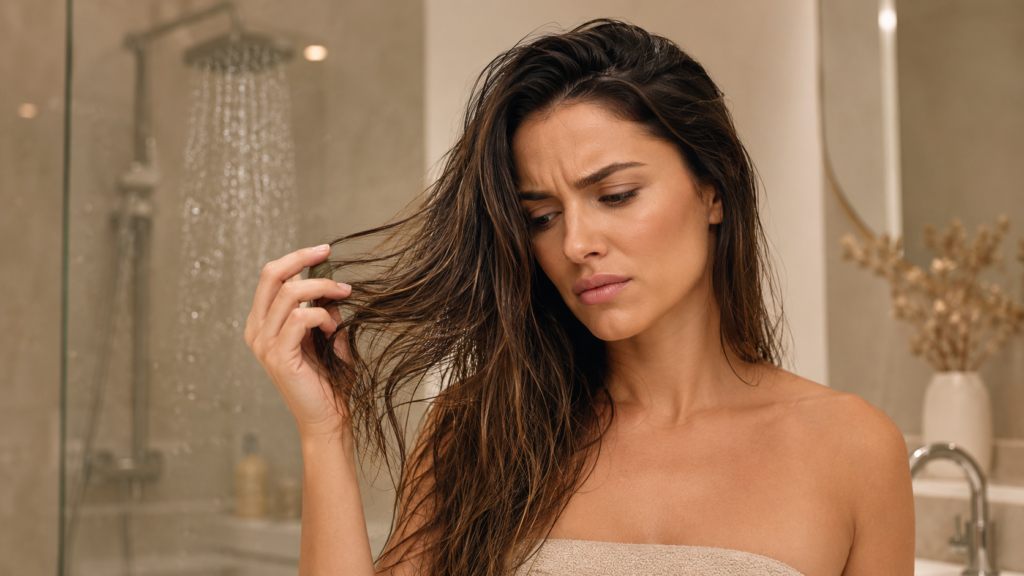
Why Hard Water Makes Hair Feel Waxy
The waxy feeling usually comes from mineral buildup.
When calcium and magnesium collect on the hair, they can leave a coating on the strand. This coating can stop your shampoo from lathering properly and make your conditioner feel less effective. Instead of soft, clean hair after washing, you may be left with hair that feels heavy, sticky, dry, or strangely greasy.
Hard water can also make your hair feel rougher because the buildup affects the surface of the hair. If your hair is already damaged, bleached, coloured, curly, or dry, you may notice the effects even more.
Signs You Might Have Hard Water Hair
Hard water hair does not look the same on everyone.
Some people notice their hair feels waxy immediately after washing. Others notice dullness, dryness, tangles, frizz, or hair that feels heavy at the roots but dry at the ends. Your shampoo may not foam easily, or your hair colour may look less fresh than usual.
You may also notice signs around your home. If your shower screen, taps, or kettle often have white chalky marks, that can be a clue that your water is hard.
If your scalp also feels greasy or coated, you may be dealing with a mix of mineral buildup and scalp buildup. They can feel similar, but the causes are not exactly the same.
Hard Water Hair vs Product Buildup
Hard water hair and product buildup are easy to confuse.
Product buildup comes from things like dry shampoo, oils, leave-in conditioner, gels, hairspray, mousse, styling creams, and heavy masks. Hard water buildup comes from minerals in your water.
Both can make hair feel coated, dull, heavy, or dirty after washing. The difference is that product buildup is usually linked to what you apply, while hard water buildup is linked to what you rinse with.
If you stop using heavy products and your hair still feels waxy after washing, hard water may be part of the problem.
Can Hard Water Damage Your Hair?
Hard water can make hair feel drier, duller, rougher, and more difficult to manage.
That does not automatically mean it is causing permanent hair loss. The bigger issue is usually breakage. If your hair becomes dry, tangled, and rough, it may snap more easily when brushing or styling. That can make your hair look thinner even if it is not falling from the root.
A small study comparing hair treated with hard water and distilled water did not find a significant difference in tensile strength or elasticity, so it is better not to claim that hard water directly causes hair loss in everyone.
If you are noticing actual shedding, bald patches, or a widening part, read our guide on hair shedding vs hair loss instead of assuming hard water is the only cause.
How to Fix Hard Water Hair
The goal is to remove mineral buildup without stripping your hair.
Start with a clarifying or chelating shampoo. Clarifying shampoos help remove general buildup, while chelating shampoos are designed to target mineral deposits more specifically. You do not need to use them every wash. For most people, occasional use is enough.
After using a clarifying or chelating shampoo, always condition your mid-lengths and ends. Removing buildup can make your hair feel lighter, but if you overdo it, your hair may start to feel dry.
The American Academy of Dermatology recommends washing hair based on how often it gets dirty or oily, and applying shampoo mainly to the scalp rather than the full length of the hair. This helps cleanse the scalp without unnecessarily drying out the lengths.
What Is a Chelating Shampoo?
A chelating shampoo is made to help remove mineral buildup.
This is different from a normal moisturising shampoo. A chelating formula is usually stronger and more targeted, so it is often used when hair feels coated from hard water, chlorine, or mineral residue.
You do not need to use it daily. Think of it as a reset step, not your everyday shampoo. If your hair feels waxy after washing and normal shampoo is not helping, a chelating shampoo may be more useful than repeatedly washing your hair with regular shampoo.
Should You Use a Shower Filter?
A shower filter may help, but it is not always the same as a full water softener.
Some shower filters can reduce certain minerals, chlorine, or impurities depending on the filter type, but not all filters truly soften water. If your water is very hard, a proper water softening system may be more effective than a basic shower filter.
Still, if your hair constantly feels waxy, dull, or coated after washing, a shower filter may be worth trying as part of your routine. Just do not expect it to fix everything overnight.
What Not to Do
Do not keep washing your hair again and again in the same day to remove the waxy feeling. That can dry your hair out and irritate your scalp.
Do not use clarifying shampoo every wash unless a professional tells you to. Too much clarifying can strip your hair and make dryness worse.
Do not cover hard water hair with more oils. Oils can make coated hair feel heavier. If you use rosemary oil for hair, keep it as a pre-wash scalp treatment and wash it out properly.
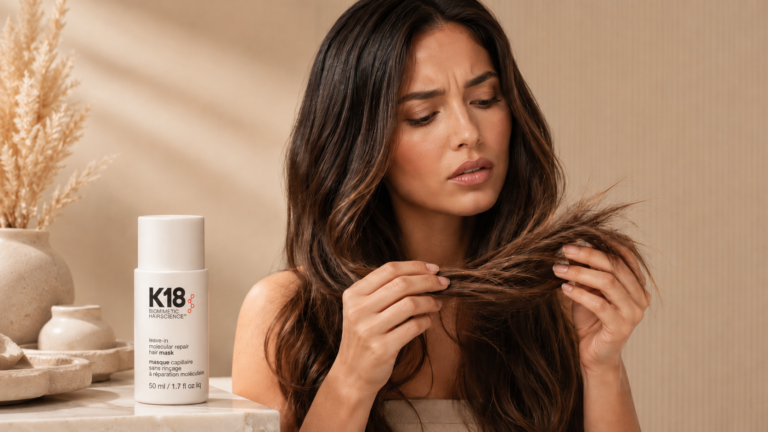
And if your hair feels damaged rather than just coated, do not assume hard water is the only issue. Heat, bleach, colour, and chemical treatments can also weaken the hair. Our K18 hair mask review explains the difference between dry-feeling hair and genuinely damaged hair.
How to Prevent Hard Water Hair Coming Back
Once your hair feels cleaner, focus on maintenance.
Use a clarifying or chelating shampoo occasionally, not aggressively. Rinse your hair thoroughly. Keep heavy products away from your roots if they make your hair feel coated. Condition your ends so your hair does not become dry after removing buildup.
If you live in a hard water area, you may need to repeat this reset every so often. Your routine does not need to be complicated — it just needs to remove residue before it builds up too much.
The Bottom Line with Hard Water Hair
Hard water hair can make your hair feel waxy, dull, dry, heavy, tangled, or dirty even after washing. It happens when minerals from your water collect on your hair and scalp, leaving behind residue that normal shampoo may not fully remove.
The fix is not to keep piling on more products. Use a clarifying or chelating shampoo occasionally, rinse properly, condition your ends, and consider a shower filter if your water is very hard.
Your hair might not need a completely new routine. It might just need less mineral buildup sitting on it.


2 Comments