How to Choose Sunscreen for Your Skin Type
How to choose sunscreen for your skin type can feel confusing when every bottle promises something different. Some say oil-free, some say mineral, some say hydrating, and some claim to leave no white cast. But the best sunscreen is not always the most expensive one — it’s the one that suits your skin, feels comfortable, and is easy enough to wear every single day.
Sunscreen is the final step in your morning skincare routine. If you’re still building your routine from scratch, start with our guide to a basic skincare routine for beginners first, then use this guide to choose the right SPF for your skin.
Why Choosing the Right Sunscreen Matters
A lot of people skip sunscreen because they think all formulas feel greasy, heavy, or uncomfortable. But usually, the problem is not sunscreen itself — it’s choosing the wrong type for your skin.
If you have oily skin, a rich cream SPF might feel too shiny. If you have dry skin, a matte sunscreen might make your face feel tight. If you have sensitive skin, fragrance or certain filters may cause stinging. Once you match the formula to your skin type, SPF becomes much easier to use consistently.
What Should Every Sunscreen Have?
Before thinking about skin type, every good daily sunscreen should have a few basics.
Look for broad-spectrum protection, SPF 30 or higher, and a formula you can apply comfortably every morning. Broad-spectrum means the sunscreen helps protect against both UVA and UVB rays. UVA rays are linked more closely to visible ageing, while UVB rays are mainly responsible for sunburn.
The American Academy of Dermatology recommends choosing a broad-spectrum sunscreen with SPF 30 or higher for daily protection.
Best Sunscreen for Oily Skin
If you have oily skin, sunscreen can feel frustrating because some formulas make your face look shiny or greasy within minutes.
Look for lightweight, oil-free, gel, fluid, or matte sunscreens. These formulas usually feel thinner on the skin and are less likely to leave a heavy layer. A matte sunscreen can be especially helpful if your T-zone gets shiny throughout the day.
Avoid very rich cream formulas unless your skin is also dehydrated. A sunscreen that feels too thick may make your skin look oilier, and if you hate the texture, you probably won’t want to apply it daily.
Best Sunscreen for Dry Skin
If your skin feels tight, flaky, or uncomfortable, choose a sunscreen that adds moisture instead of taking it away.
Hydrating cream sunscreens usually work best for dry skin because they feel more nourishing and comfortable throughout the day. Look for formulas that mention hydration, moisture, or barrier support.
If your skin is dry and foundation often clings to patches, your sunscreen can actually help create a smoother base. You may also want to read our guide on the best foundation for your skin type so your skincare and makeup work together instead of fighting your skin.
Best Sunscreen for Sensitive Skin
Sensitive skin needs a gentle approach.
Mineral sunscreens are often a good place to start because they usually use zinc oxide or titanium dioxide. These ingredients are commonly found in formulas made for easily irritated skin. Fragrance-free sunscreens are also usually a safer choice if your skin reacts quickly.
If your skin currently stings, burns, or reacts to almost everything, your barrier may be damaged. In that case, keep your routine simple and read our guide on how to fix your skin barrier before adding too many new products.
Best Sunscreen for Acne-Prone Skin
If you break out easily, sunscreen can feel risky — but skipping SPF is not the answer.
Look for lightweight, non-comedogenic, oil-free formulas. These are designed to be less likely to clog pores. Gel, fluid, and water-based sunscreens often feel better on acne-prone skin than thick creams.
The key is to avoid formulas that feel heavy, sticky, or greasy on your face. A sunscreen that sits comfortably is much easier to use every day, and consistency matters more than finding a “perfect” product.
Best Sunscreen for Combination Skin
Combination skin can be tricky because different areas of your face behave differently.
You might have an oily T-zone but normal or dry cheeks. In this case, a lightweight lotion or fluid sunscreen is usually a good middle ground. It gives enough comfort without feeling too rich or too matte.
If your T-zone gets shiny, you can use a little setting powder over your sunscreen before makeup. This helps control shine without needing to switch to an overly drying SPF.
Best Sunscreen for Deeper Skin Tones
For deeper skin tones, the main issue is usually white cast.
Some mineral sunscreens can leave a grey, purple, or chalky layer on the skin, especially if the formula is thick. If this happens, look for tinted sunscreen, invisible sunscreen, or formulas specifically described as no-white-cast.
Tinted sunscreen can be especially useful because it helps even out the skin slightly while still giving sun protection. It can also work well if you want a lighter alternative to foundation.
Chemical vs Mineral Sunscreen
There are two main sunscreen categories: chemical and mineral.
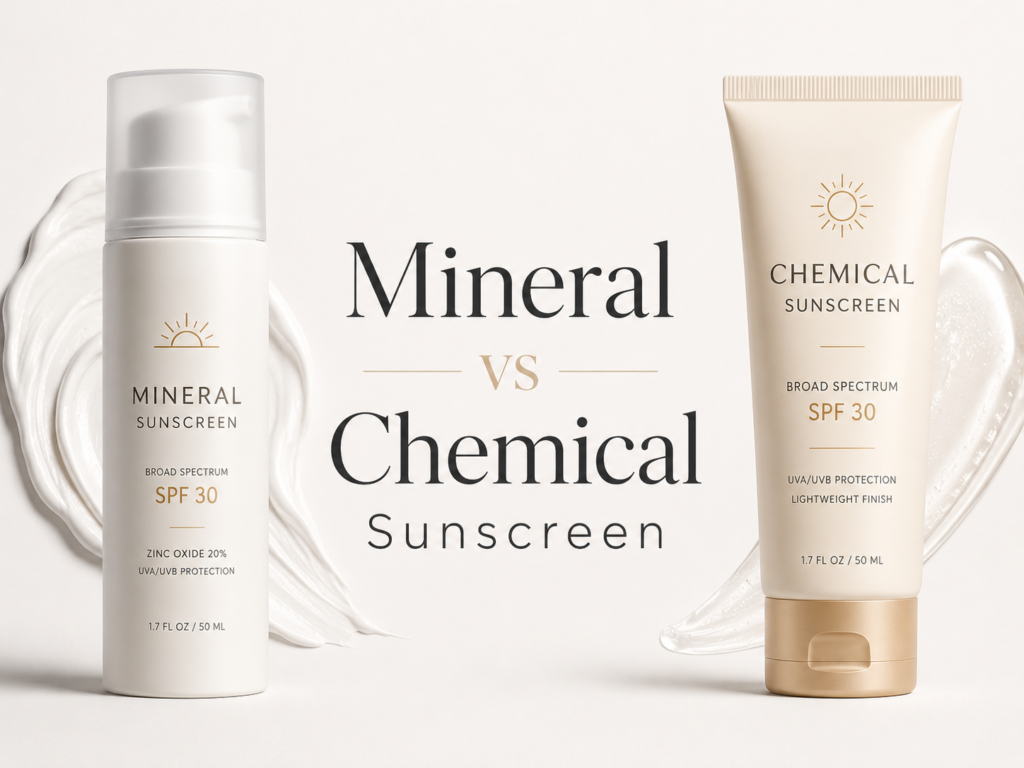
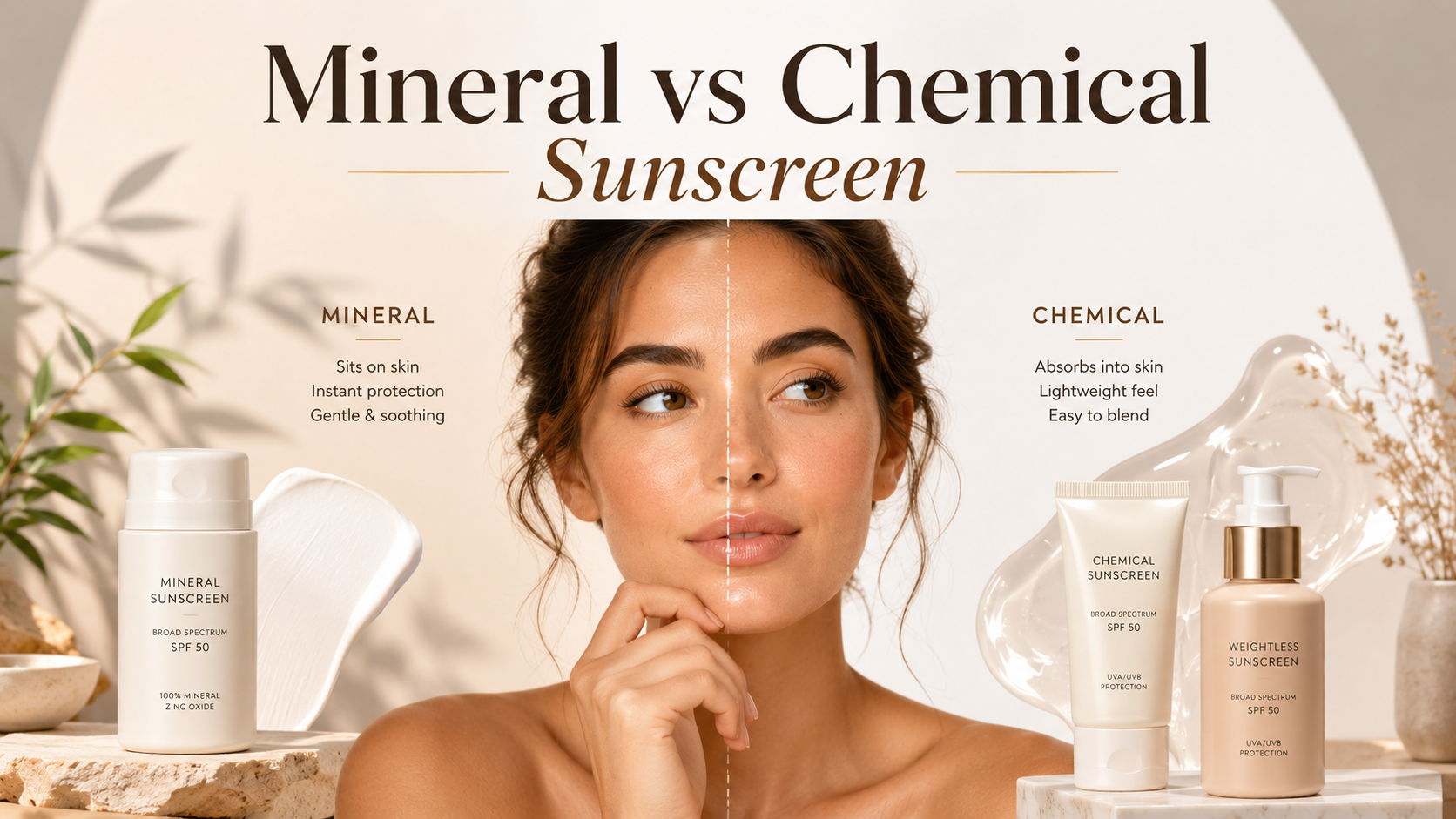
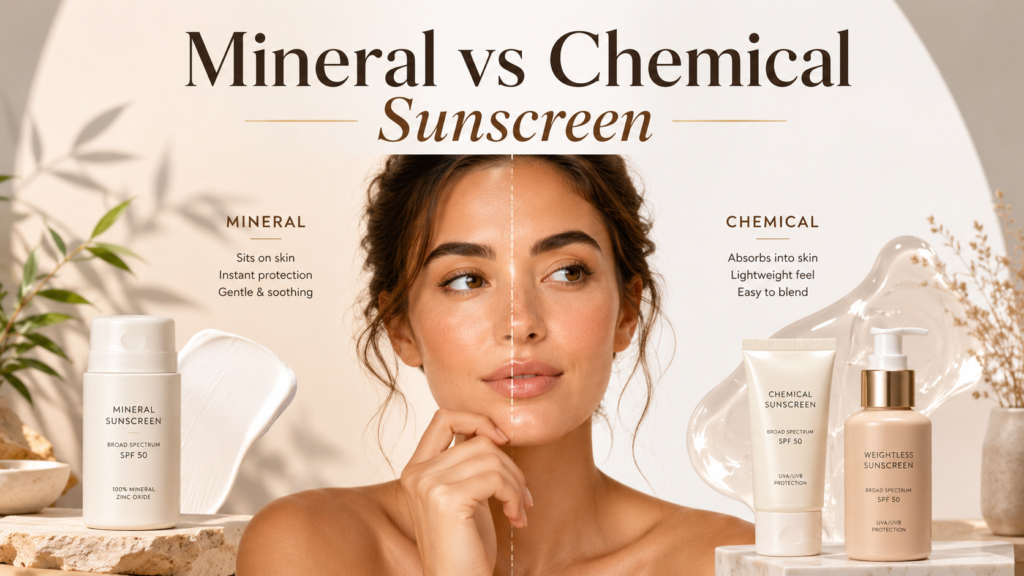
Chemical sunscreens usually feel lighter and blend more easily, which makes them popular for everyday wear and under makeup. Mineral sunscreens tend to sit more on the surface of the skin and are often preferred by people with sensitive skin.
Neither option is automatically better for everyone. The right choice depends on your skin type, comfort, and whether you’ll actually wear it daily.
What About SPF Under Makeup?
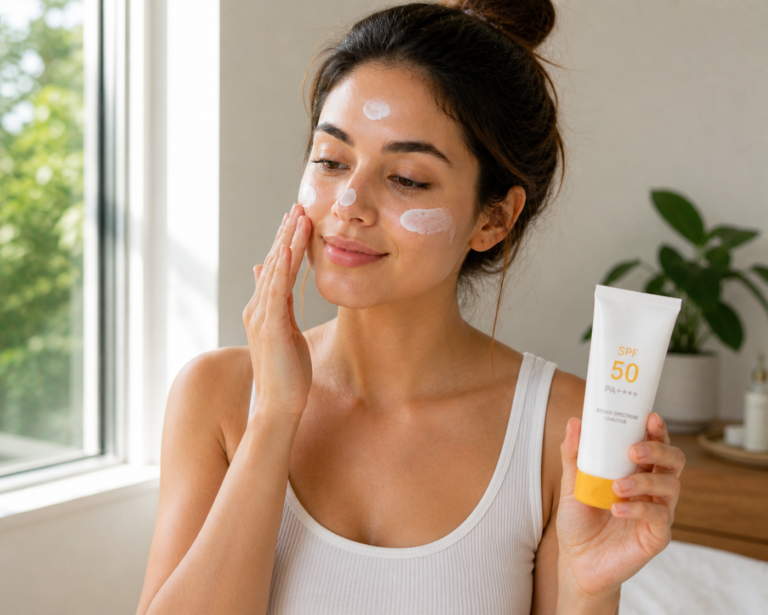
Sunscreen should always go on before makeup.
Apply it after moisturiser and give it a few minutes to settle before foundation. This helps reduce pilling and gives your base a smoother finish. If your makeup still separates or looks patchy, the issue may be your skin prep or foundation technique.
Our guide on how to apply foundation for beginners can help you layer your base more smoothly.
The Bottom Line for how to choose sunscreen for your skin type
Learning how to choose sunscreen for your skin type makes daily SPF much easier. Oily skin usually does better with lightweight or matte formulas, dry skin needs something more hydrating, sensitive skin often prefers fragrance-free mineral formulas, and deeper skin tones may benefit from tinted or no-white-cast options.
The best sunscreen is the one you’ll actually use every morning. It doesn’t need to be fancy, expensive, or complicated. It just needs to protect your skin and feel comfortable enough that you don’t dread applying it.
Once you find a formula that works for your skin, SPF becomes much easier to keep as a daily habit. And that habit is one of the most important things you can build for long-term skin health.



3 Comments