
Best Foundation for Your Skin Type (Beginner-Friendly Guide)
Best foundation for your skin type isn’t just about shade — your skin type plays a huge role in how foundation looks, feels, and lasts throughout the day. If your makeup ever looks too oily, patchy, or dry, it’s usually because the formula doesn’t match your skin rather than the product itself being “bad.”
Understanding your skin type makes it much easier to choose a foundation that actually works for you, rather than constantly trying to fix issues after applying it. Once you get this right, your foundation will start to look more natural and require far less effort.
How Skin Type Affects Foundation
Your skin type directly affects how foundation behaves once it’s on your face.
Oily skin tends to break down foundation faster, which can make it look shiny or uneven after a few hours. Dry skin can cause foundation to cling to rough patches and emphasise texture. Combination skin often experiences both issues at the same time, while normal skin is generally more balanced and easier to work with.
If you’ve already learned how to apply foundation for beginners, choosing the right formula is the next step in getting a smooth, even finish that actually lasts.
How to Identify Your Skin Type
Before choosing a foundation, you need to understand how your skin behaves throughout the day.
If your skin becomes shiny fairly quickly, especially around your forehead, nose, and chin, you likely have oily skin. If your skin often feels tight, flaky, or rough, it’s usually dry. If you notice oil in some areas but dryness in others, you probably have combination skin. If your skin feels balanced without noticeable oiliness or dryness, it’s considered normal.
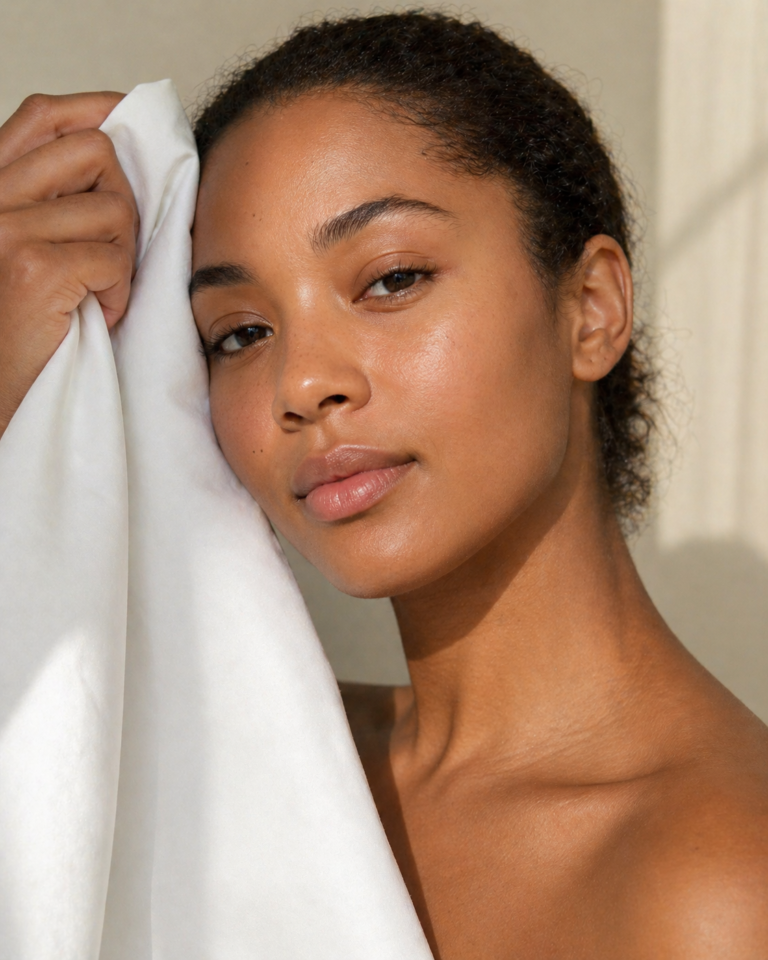
A simple way to check is to wash your face, leave it bare for about an hour, and observe how it feels. This gives you a clearer idea of your natural skin type without interference from products.
For a more detailed explanation of how different skin types behave, the American Academy of Dermatology provides a helpful overview of skin care fundamentals.
Best Foundation for Oily Skin
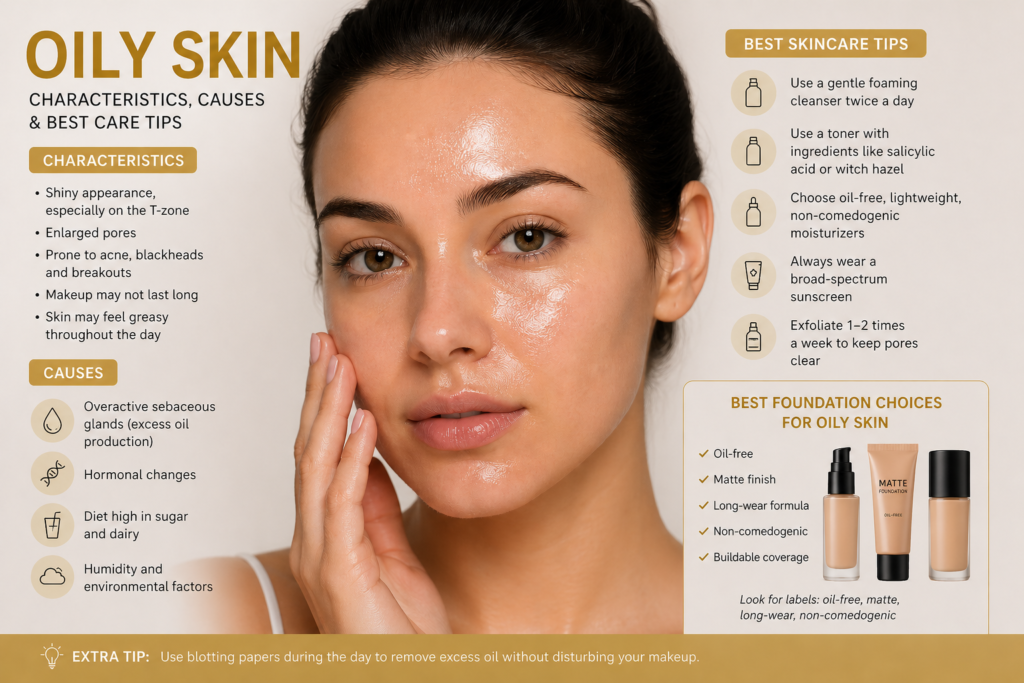
If you have oily skin, the goal is to control shine and keep your foundation in place for as long as possible.
Foundations labelled matte, oil-free, or long-wear are usually the best options. These formulas are designed to absorb excess oil and stay more stable throughout the day. Lightweight formulas tend to work better than heavy ones, as they are less likely to slide around or break down.
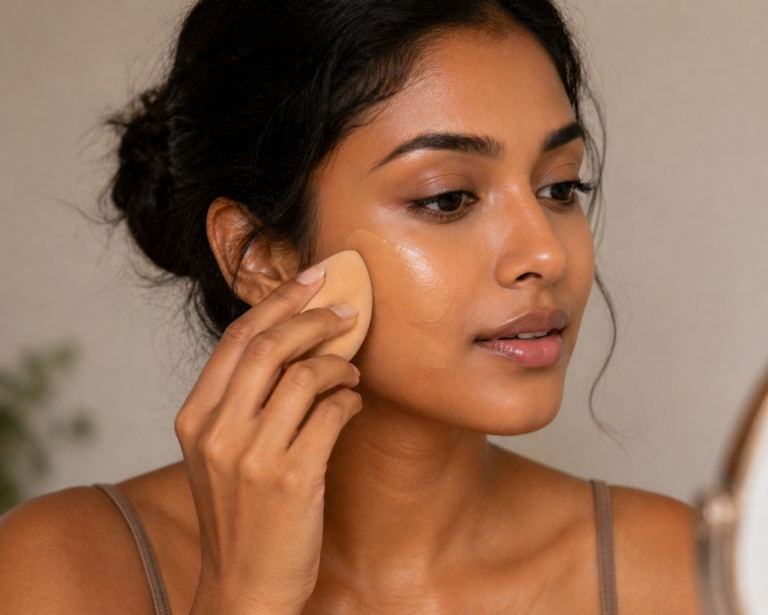
It also helps to apply foundation in thin layers and build coverage gradually rather than applying a lot at once. Using too much product can actually make oiliness more noticeable over time.
Best Foundation for Dry Skin
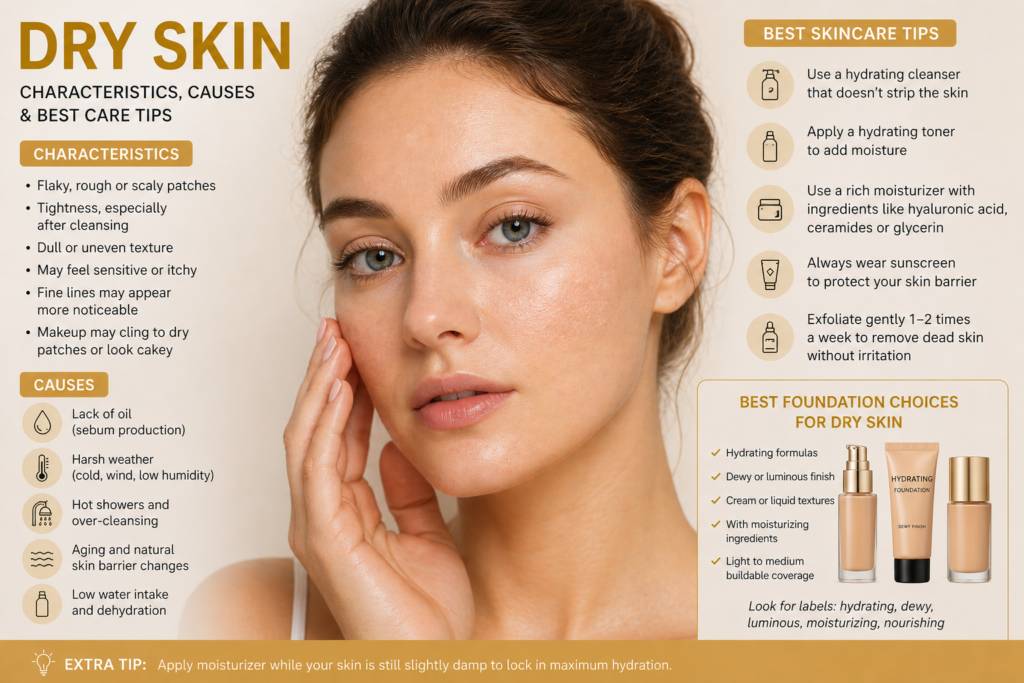
Dry skin needs a foundation that adds hydration rather than taking it away.
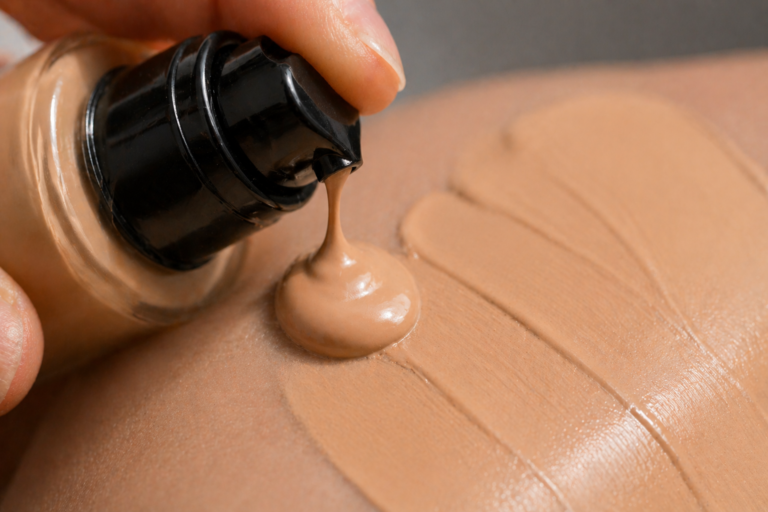
Look for foundations described as hydrating, dewy, or luminous. These formulas help create a smoother surface and prevent the foundation from settling into dry patches. Cream and liquid foundations usually work better than powder formulas, as they blend more easily into the skin.
Skin preparation is especially important here. A good moisturiser can completely change how your foundation looks, making it appear smoother and more natural.
Best Foundation for Combination Skin
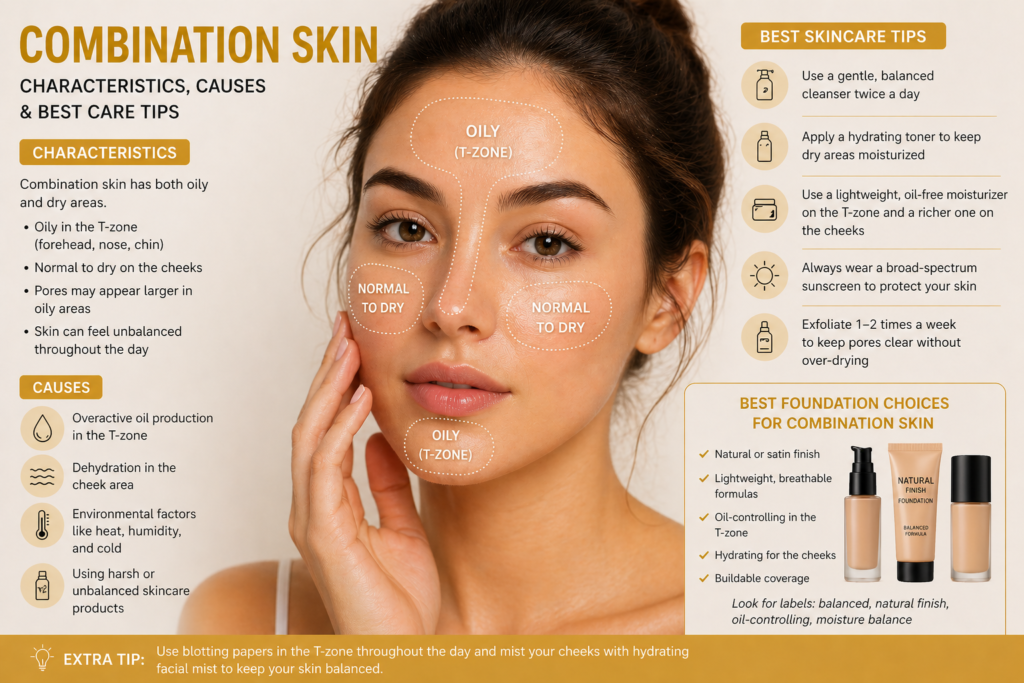
Combination skin can be slightly more difficult to manage, as different areas of your face have different needs.
A natural or satin finish foundation is usually the safest option because it balances both oil and dryness. You can also adjust how you apply foundation depending on the area — using less product in oily areas and building coverage where needed.
If you’re unsure which formula to choose, experimenting with different finishes can help. Our guide on types of foundation makeup explains the differences in more detail.
Best Foundation for Normal Skin
If you have normal skin, you have the most flexibility when choosing foundation.
Most formulas will work well, whether you prefer a matte, natural, or dewy finish. The focus here is more on personal preference rather than solving specific issues.
Even with normal skin, choosing the right shade is still essential. If your foundation ever looks slightly off, learning how to find your foundation shade will make a noticeable difference in how natural it looks.
Adjusting Foundation for Different Seasons
Your skin type isn’t always completely consistent throughout the year.
In colder months, skin tends to become drier, which means you may need a more hydrating foundation. In warmer months, increased oil production can make matte or long-wear formulas more suitable.
Paying attention to these changes and adjusting your foundation accordingly can help maintain a consistent, natural finish year-round.
Common Mistakes When Choosing Foundation for Your Skin Type
A common mistake is choosing foundation based only on how it looks immediately after application. Some formulas look good at first but don’t wear well throughout the day, especially if they don’t match your skin type.
Another mistake is using too much product. More foundation doesn’t fix issues — it often makes them more noticeable. A light, well-blended layer will always look better than a heavy one.
It’s also important not to rely on one product for everything. Sometimes small adjustments in your routine, such as better skin prep or changing application technique, can make a bigger difference than switching foundation entirely.
The Bottom Line
Choosing the best foundation for your skin type is just as important as choosing the right shade. Once you understand how your skin behaves, it becomes much easier to find a formula that works with it rather than against it.
The right foundation should feel comfortable, blend easily, and wear well throughout the day without constant adjustments. It shouldn’t feel heavy or look obvious — it should simply enhance your skin.
As you get more familiar with your skin, you’ll start to recognise what works and what doesn’t. This makes choosing foundation quicker, easier, and far less frustrating over time.

2 Comments