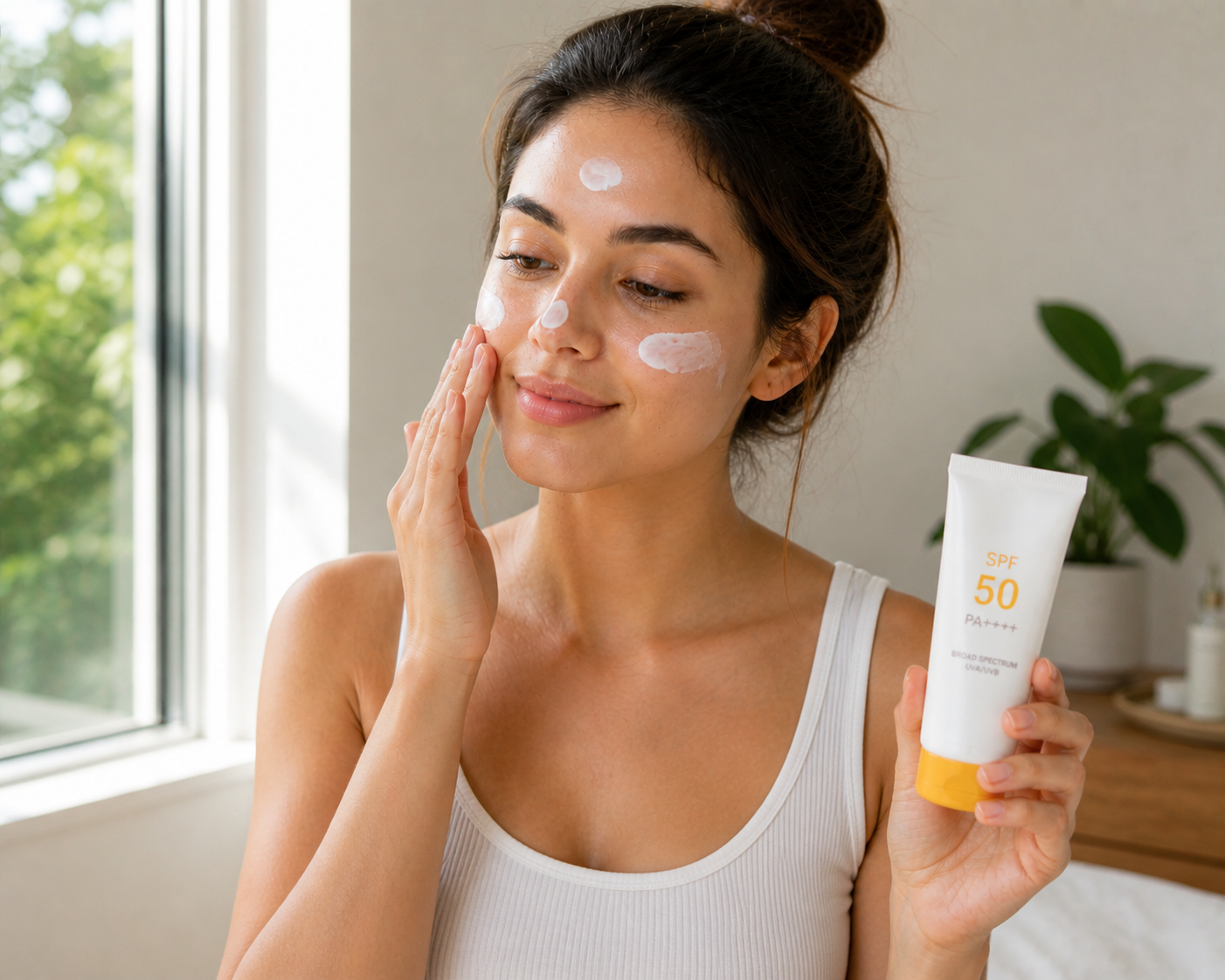
How to Build a Basic Skincare Routine (For Complete Beginners)
If you’ve never had a skincare routine before, it can feel like everyone else knows a secret you weren’t told. Ten-step routines, serums, acids, SPF layering — it’s a lot. And most of it, honestly, you don’t need when you’re just starting out.
A basic skincare routine really comes down to three steps. That’s it. Cleanse, moisturise, and protect. Everything else is optional and can come later once you’ve built the habit and know what your skin actually needs.
This guide teaches you how to do a basic skincare routine for beginners, in what order, and why — with no overwhelming product lists or complicated steps.
Why bother with a skincare routine at all?
Your skin is working constantly — protecting you from the environment, regulating temperature, renewing itself overnight. A basic routine just supports what it’s already doing. It removes the dirt and oil that builds up throughout the day, keeps your skin barrier strong and hydrated, and protects against the sun damage that causes most visible ageing over time.
You don’t need to spend a lot of money or time. Even five minutes morning and night makes a real difference when it’s consistent.
The 3 steps every beginner needs
Step 1: Cleanser
Cleansing removes dirt, oil, sweat, pollution, and — if you wear it — makeup from your skin. It’s the foundation of any routine because nothing else you apply will work properly on skin that hasn’t been cleaned first.
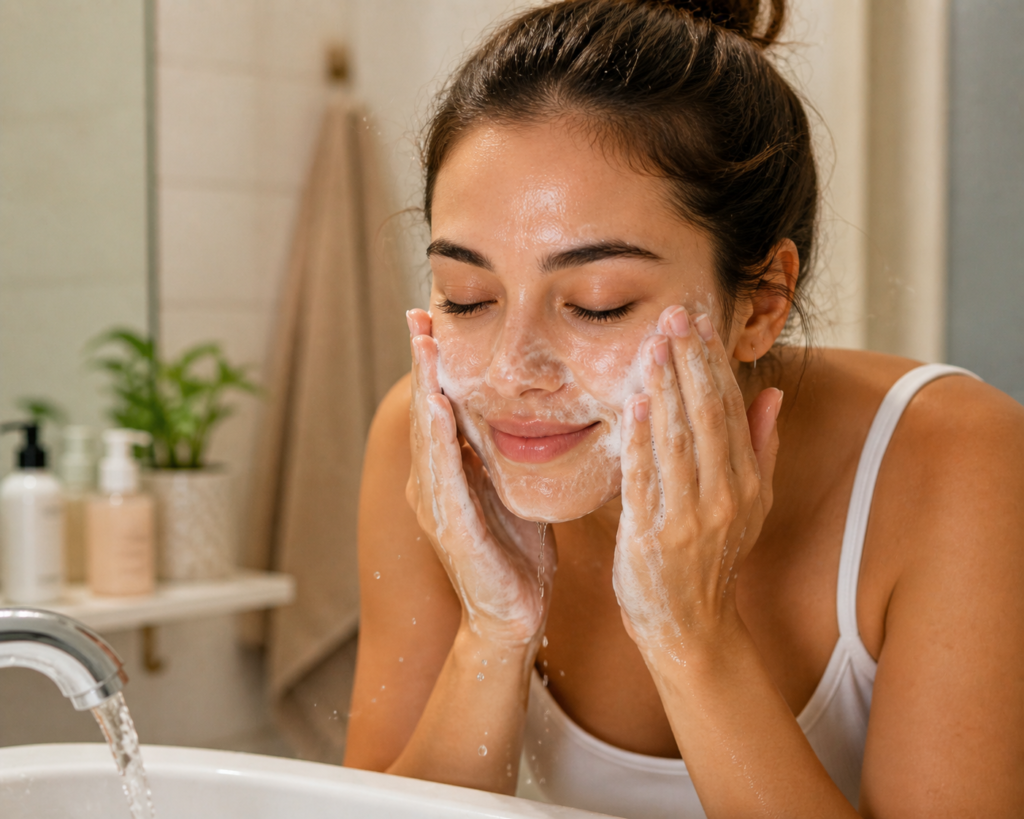
When to cleanse: Morning and night. In the morning you’re removing oil, sweat and skincare from overnight. At night you’re removing everything your skin has been exposed to throughout the day.
What to look for: A gentle, non-stripping cleanser. If your face feels tight, dry, or squeaky-clean after washing, the cleanser is too harsh. Your skin should feel clean but comfortable — not like something has been stripped away.
How to use it:
- Wet your face with cold water (hot water can irritate and dry out skin)
- Apply a small amount of cleanser and massage gently in circular motions for about 30–60 seconds
- Rinse thoroughly and pat dry with a clean towel — don’t rub
Quick guide by skin type:
- Oily skin: Gel or foaming cleanser
- Dry skin: Cream or milk cleanser
- Combination skin: Gentle gel cleanser or balancing formula
- Sensitive skin: Fragrance-free, soap-free cream cleanser
Step 2: Moisturiser
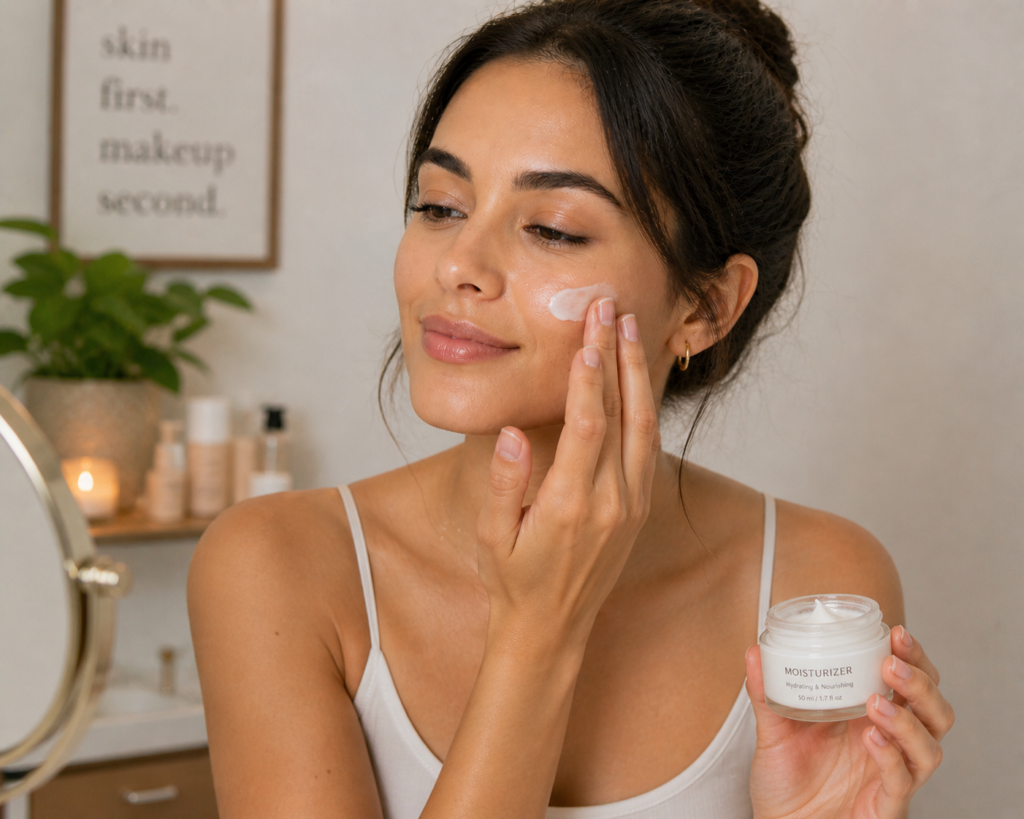
After cleansing, your skin needs moisture replenished. Moisturiser does two things: it hydrates the skin and it seals that hydration in so it doesn’t evaporate throughout the day (or overnight).
Even oily skin needs moisturiser. When skin is dehydrated, it overproduces oil to compensate — which can make oiliness worse, not better. A lightweight moisturiser actually helps balance oil production over time.
When to moisturise: Morning and night, applied to slightly damp skin right after cleansing. Damp skin absorbs moisturiser better than dry skin does.
How to apply it:
- Take a small amount — about the size of a pea or two
- Dot it across your forehead, cheeks, nose, and chin
- Blend gently upward and outward using your fingertips
- Don’t forget your neck and the back of you next and even the upper part of your chest
Quick guide by skin type:
- Oily skin: Lightweight gel or water-based moisturiser
- Dry skin: Rich cream or balm formula
- Combination skin: Light lotion — heavier on dry areas if needed
- Sensitive skin: Fragrance-free, minimal-ingredient formula
Step 3: SPF (morning only)
This is the step most beginners skip — and it’s the one that makes the most difference to your skin long-term.
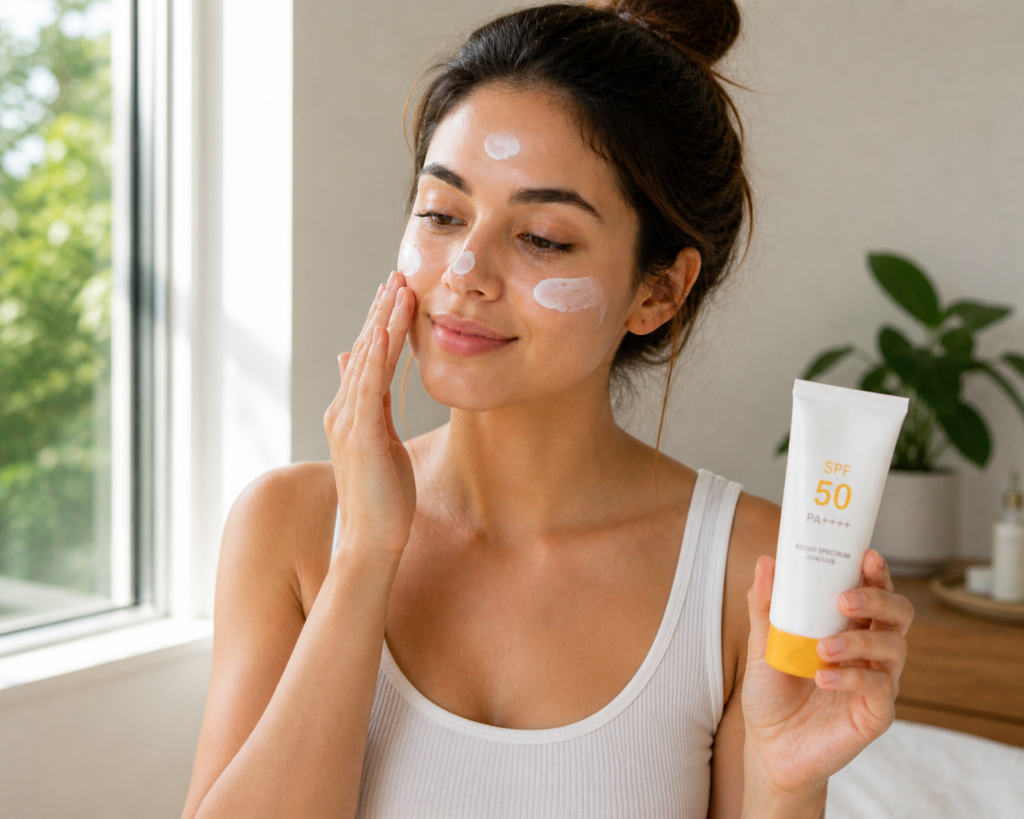
Sun exposure is the single biggest cause of premature ageing, dark spots, and uneven skin tone. UV rays affect your skin every single day, not just on sunny days or at the beach. Even sitting by a window or driving in a car exposes you to UV damage.
SPF 30 or higher (I use 50+) is the standard recommendation for daily use. Apply it as the last step of your morning routine, after your moisturiser has absorbed.
How to apply sunscreen properly:
- Use about half a teaspoon for your face and neck
- Apply at least 15–20 minutes before sun exposure if possible
- Blend evenly across your whole face — don’t miss the hairline, ears, or neck
- Reapply every 2 hours if you’re spending time outdoors
Modern SPF formulas are lightweight, non-greasy, and sit beautifully under makeup. If you’ve tried sunscreen before and didn’t like the texture, it’s worth trying a newer formula — they’ve come a long way.
Your complete beginner routine at a glance
Morning:
- Cleanse
- Moisturise
- SPF
Night:
- Cleanse
- Moisturise
That’s genuinely it. Three products, five minutes morning and night. You don’t need anything else to start seeing and feeling a difference in your skin.
A few things beginners often wonder
Do I really need to cleanse in the morning if I cleansed the night before?
Yes — but a gentle cleanse is enough. While you sleep, your skin produces oil, sweats, and sheds dead skin cells. A quick morning cleanse clears all of that so your moisturiser and SPF can absorb properly and work effectively.
What if my skin reacts to a new product?
Introduce one new product at a time and use it consistently for at least two weeks before adding anything else. That way, if your skin reacts, you know exactly what caused it. If you experience redness, stinging, or breakouts that don’t settle after a few days, stop using that product and go back to basics.
How long until I see results?
Skin renews itself roughly every 28 days, so give any new routine at least 4–6 weeks before judging whether it’s working. Consistency matters far more than using the “right” products.
Can I skip SPF if my moisturiser has SPF in it?
Moisturisers with SPF are better than nothing, but most people don’t apply enough moisturiser to reach the SPF protection stated on the label. A dedicated SPF product applied on top gives you more reliable protection. If using a separate SPF feels like too much for now, a moisturiser with SPF 30+ is still a good start — just be generous with the amount.
What comes after the basics?
Once you’ve been consistent with cleanse, moisturise, and SPF for a few weeks and it feels like second nature, you can start thinking about adding extras — things like a toner, an eye cream, or a targeted serum for specific concerns like dullness or dark spots.
But there’s genuinely no rush. The three-step routine above is what dermatologists recommend as the core of any good skincare practice. Everything else builds on top of it. A good makeup base also starts with skincare. You can checkout our guide on how to apply foundation for beginners.
The most important thing is just to start. Even an imperfect routine done consistently will do more for your skin than a perfect routine done occasionally — something consistently reinforced by dermatology guidance on maintaining healthy skin.
Are you starting your skincare routine from scratch, or do you already have a step you swear by? Share it in the comments — I’d love to know where you’re starting from.





5 Comments