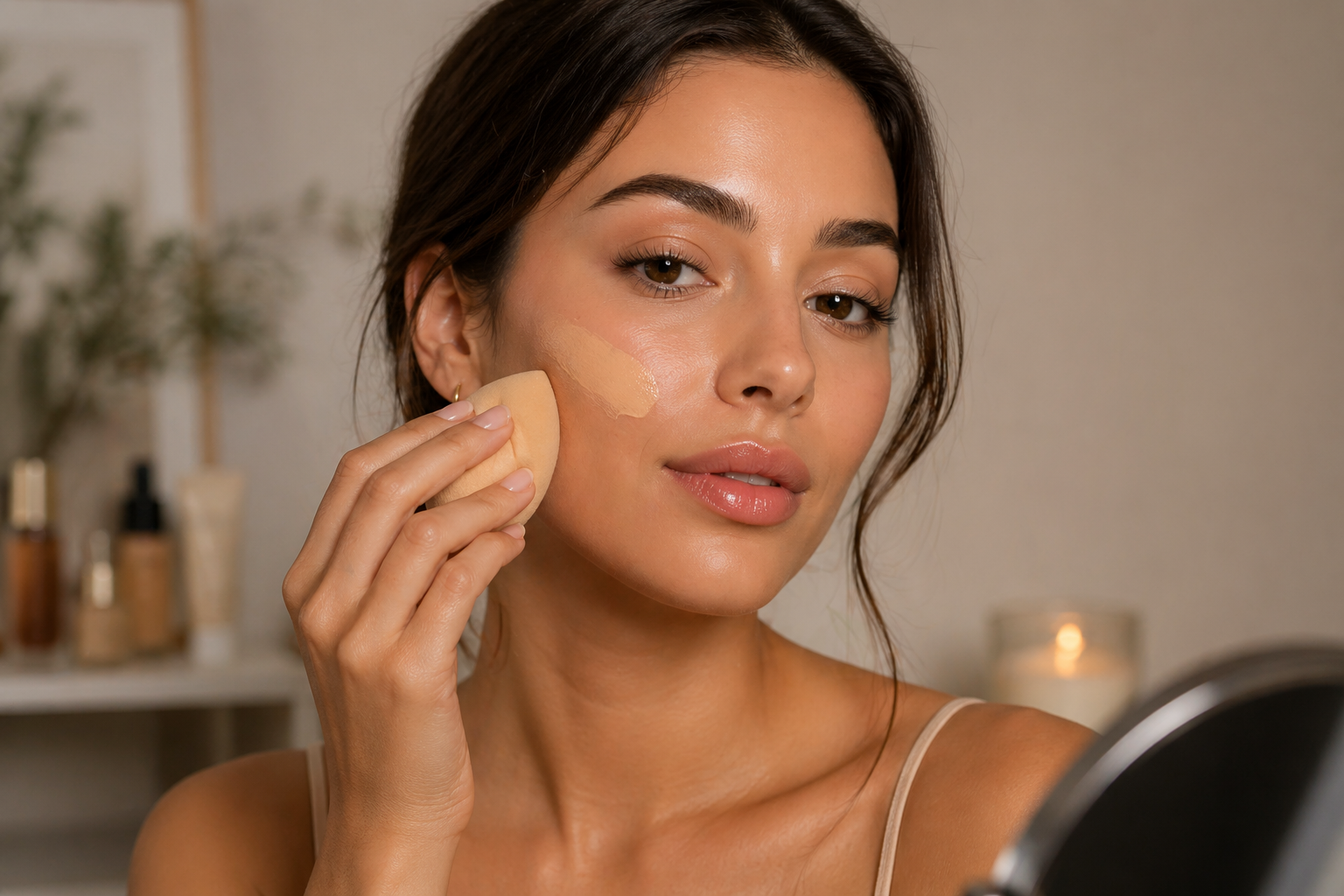
What is Foundation Makeup? 5 Things Every Beginner Must Know
If you’ve ever wondered what foundation makeup actually is and where to start — you’re not alone. If you’ve ever stood in the makeup aisle staring at rows of bottles, sticks and compacts wondering where on earth to start — you’re not alone. Foundation is one of those products that sounds simple but can feel incredibly overwhelming when you’re new to makeup. So let’s break it all down, clearly and simply.
So, What is Foundation Actually?
Think of foundation as the base of your makeup look — just like the foundation of a building, it’s what everything else sits on top of. It’s a product you apply all over your face to even out your skin tone, cover any redness, dark spots or blemishes, and create a smooth canvas for the rest of your makeup.
Foundation goes on after your skincare and primer, and before products like blush, bronzer or concealer. It’s not about covering up who you are — it’s about creating an even, polished version of your natural skin.
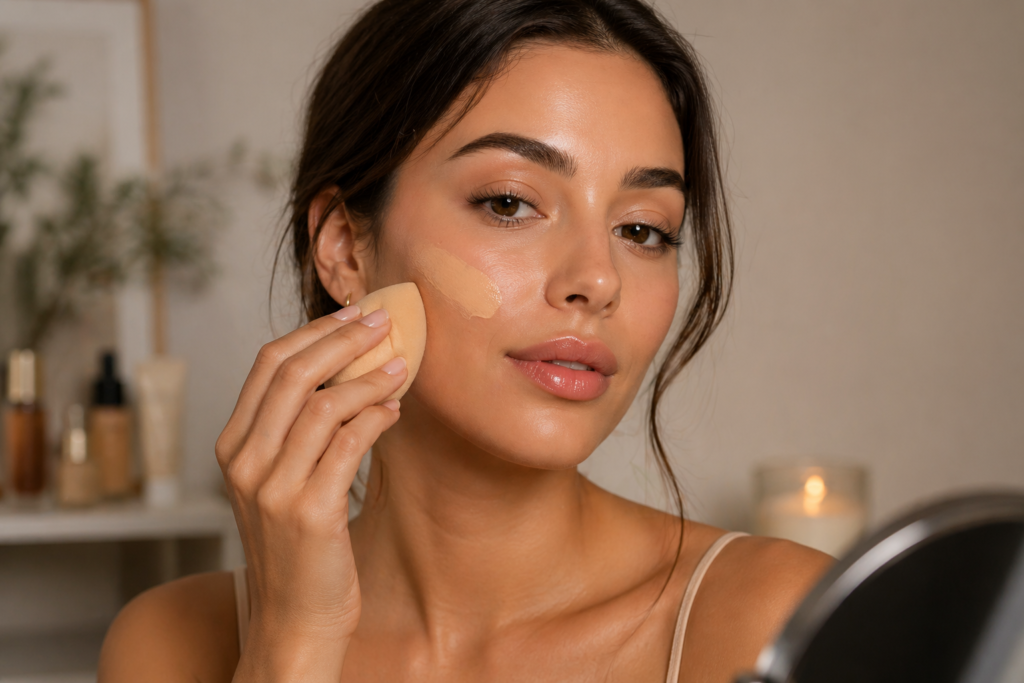
Do You Even Need Foundation?
Honestly? Not always. Foundation is a choice, not a requirement. If your skin is fairly even and you just want a little coverage, a tinted moisturiser or BB cream might be all you need. But if you want your blush to pop, your contour to show up and your makeup to last longer — foundation is your best friend.
Types of Foundation Explained
There are several types of foundation and each one works differently depending on your skin type and the look you’re going for.
Liquid Foundation is the most popular type and the best starting point for beginners. It’s easy to blend, buildable (meaning you can add more coverage if you need it) and works for almost every skin type. You can apply it with a brush, sponge or even your fingers.
Powder Foundation is lightweight and great for oily skin. It gives a matte finish and is quick to apply — perfect if you’re always on the go. However, it can look a little dry on skin that’s already dry or textured.
Cream Foundation is thick and rich, making it ideal for dry skin. It gives fuller coverage and a dewy finish, leaving skin looking hydrated and glowy.
Stick Foundation is exactly what it sounds like — foundation in a solid stick form. It’s travel-friendly, gives good coverage and can even double up as a concealer in a pinch. Just blend it out well so it doesn’t look heavy.
BB Cream / Tinted Moisturiser is the lightest option. It gives sheer, natural coverage while hydrating your skin at the same time. Perfect for everyday wear or a no-makeup makeup look.
How to Choose the Right Foundation for You
With so many options, how do you pick? Here are the three things to consider:
Your skin type — oily skin does best with matte, oil-free formulas. Dry skin loves cream or liquid foundations with hydrating ingredients. Combination skin can work well with a medium-coverage liquid formula.
Your coverage preference — do you want your freckles to show through? Go for light coverage. Want to completely even out your skin tone? Look for medium to full coverage.
Your undertone — this is the biggest shade-matching mistake beginners make. Your undertone is the subtle hue beneath your skin — cool (pink), warm (yellow/golden) or neutral (a mix of both). Choosing a foundation that matches your undertone stops it from looking too orange, too grey or just wrong on your skin.
How to Apply Foundation as a Beginner
- Start with clean, moisturized skin (You can do your skin care before this as well)
- Apply a small amount of primer if you have it — this helps foundation last longer
- Dot foundation onto your forehead, cheeks, nose and chin. Do not put any on your under-eye area!
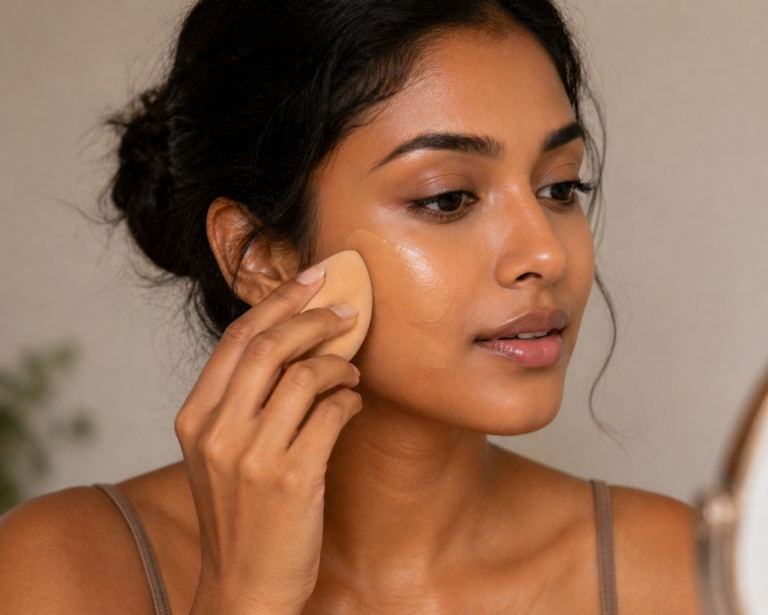
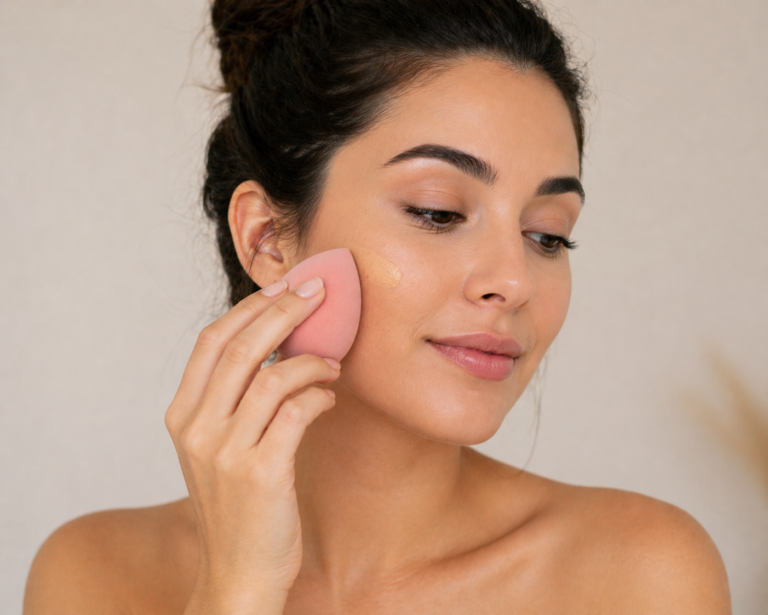
- Blend outward from the centre of your face using a damp sponge, brush or clean fingers
- Always blend down your neck so there’s no harsh line at your jawline
- Build up coverage slowly — it’s much easier to add more than to fix too much
- Set with a light dusting of translucent powder if you have oily skin
One Golden Rule for Shade Matching
Always test foundation on your jawline — not your hand, not your wrist. Your hand is almost always a different shade to your face. Test in natural light, wait a few minutes for it to settle, and choose the shade that disappears into your skin. That’s your match.
The Bottom Line
Foundation doesn’t have to be complicated. Start with a light to medium coverage liquid foundation, match it to your jawline in natural light, and blend it out with a damp sponge. That’s genuinely all you need to know to get started. The rest? You’ll figure out as you go — and Glamossary will be here every step of the way. Skin reacts differently to makeup depending on your skin type. For more on understanding your skin, the American Academy of Dermatology has some great guidance.
Keep Exploring
Now that you know your base, it’s time to add some colour. Check out our guide on What is Blush and How to Apply It to take your makeup to the next level.

One Comment